Can a Period Underwear Manufacturer Create Custom Designs?
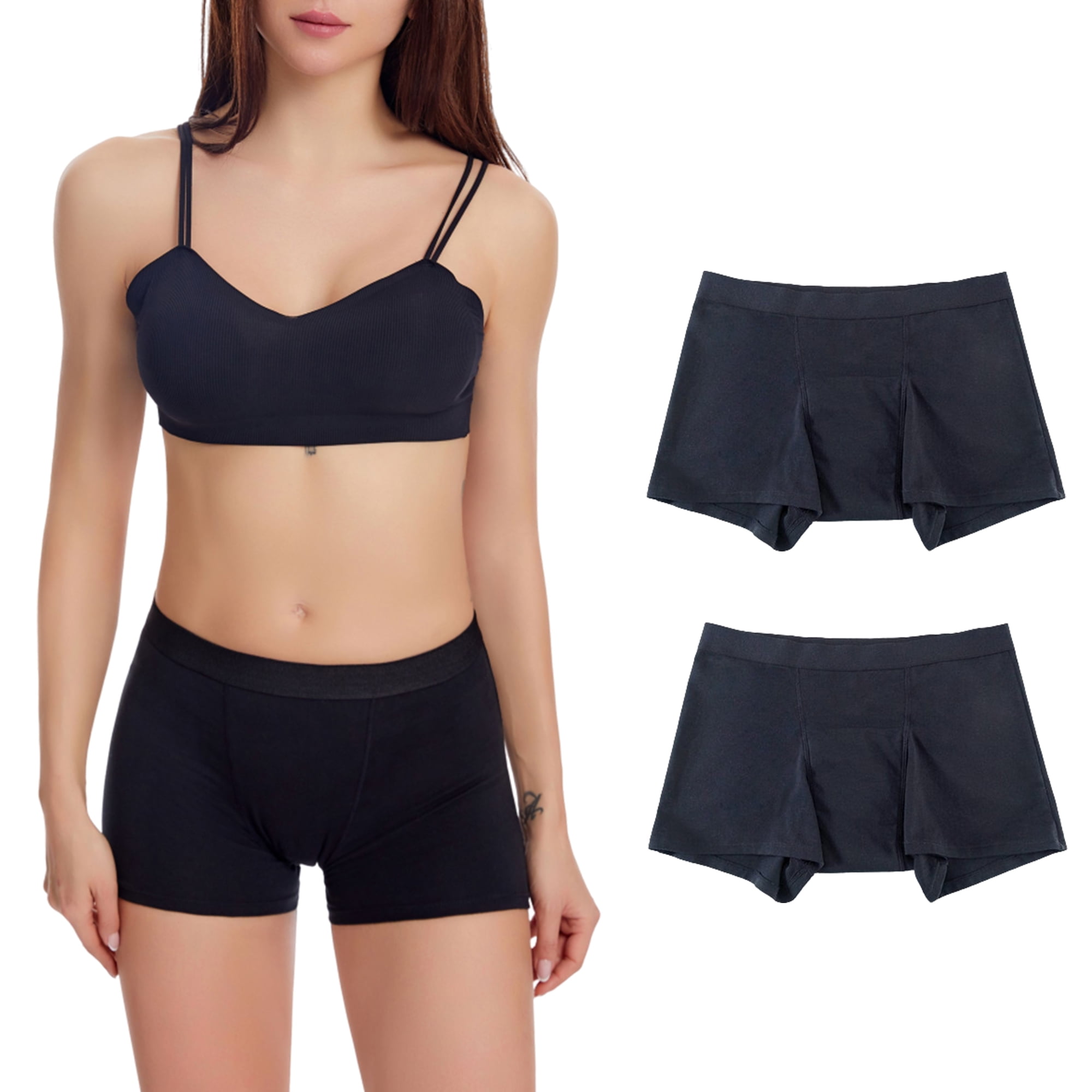
Yes. A period underwear manufacturer can develop custom silhouettes, gusset lengths, absorbency levels, fabrics, waistbands, labels, colors, and packaging rather than only adding a logo to a stock brief. A custom program may involve 3–5 functional layers, 5–8 sizes, several prototypes, and separate material tests before production. In the EU, textile composition labeling follows Regulation (EU) No 1007/2011, while brands selling in the US must consider FTC textile labeling rules. The more the design changes fit, absorbency, or leak protection, the more testing is needed before bulk production. MOQ, material availability, construction method, and documented performance claims usually set the practical limits.
A manufacturer can start with an existing brief and change a few components, or build a new pattern from a tech pack. The second route takes more development because a 20 mm change in gusset length, a wider waistband, or a different outer fabric can alter fit and material consumption. A collection with 3 styles, 2 colors, 2 absorbency levels, and 6 sizes already contains 72 SKUs, so product architecture should be settled before purchase orders are divided across sizes.
That SKU count leads directly to MOQ planning. A sewing factory may accept a relatively modest garment quantity, while a fabric mill, elastic supplier, or packaging printer can have a separate minimum. If a brand orders 1,200 pieces across 72 SKUs, the mathematical average is only 16.7 units per SKU before size demand is weighted, which is difficult for cutting, packing, replacements, and inventory control.
A low garment MOQ does not automatically produce a low project MOQ. Fabric dyeing, custom elastic, printed packaging, and specialized functional materials can each create their own purchasing minimum.
For that reason, many first collections use fewer colors and more size depth. A range of 2 styles × 2 colors × 6 sizes produces 24 SKUs; adding a second absorbency option doubles it to 48. Keeping the first production run concentrated also gives the manufacturer larger cutting quantities per variation and gives the brand clearer sales data before a second order.
Product development then moves from quantity planning to the garment itself. Period underwear is normally built as a textile system rather than a single piece of absorbent fabric. Depending on the construction, a design may combine a body-facing layer, acquisition or moisture-management material, an absorbent section, a leak-resistant membrane, and the outer garment fabric. Counting the outer shell, some designs therefore contain 4–5 material functions in the gusset area.
The layers cannot simply be made thicker to raise capacity. Extra absorbent material can change stiffness, drying time, seam thickness, and how closely the gusset follows the body. A manufacturer developing moderate and heavy versions may change the absorbent material, its area, or the number of layers instead of increasing every layer by the same percentage. A 25% larger gusset area, for example, affects fabric consumption differently from adding another full absorbent layer.
Gusset geometry therefore deserves its own specification. Length, front extension, rear extension, width at different points, and the position relative to the garment pattern can all be customized. Moving a functional section 20–30 mm may sound minor on a drawing, but underwear is a close-fitting garment, so small dimensional changes can noticeably alter where the protective area sits during wear.
A daytime brief may use shorter rear coverage than a product intended for sleeping. Instead of labeling both products simply “absorbent,” the tech pack can record gusset dimensions in millimeters and identify every material layer. A measurable specification is more useful to a factory than terms such as “extra protection” or “very absorbent.”
Once geometry is established, liquid-management performance has to be described in measurable terms. Brands often market period underwear using milliliters or comparisons with disposable products, but a laboratory capacity number and real wear performance are not identical. Test conditions can vary by liquid, application rate, pressure, specimen size, conditioning, and the point at which failure is recorded.
A product described as holding 30 mL, for example, should not receive that number because a competing product uses it. The manufacturer and brand should establish a repeatable method and keep the test report connected to the exact material construction being sold. Changing one absorbent material after testing can make an earlier result unsuitable for the revised production specification.
Capacity, leakage resistance, rewet, spreading, and drying are separate measurements. One result should not be used as a substitute for all five.
Wash performance adds another layer of development because reusable underwear may be washed dozens of times during its service period. A useful validation program can compare new samples with garments after 5, 10, 20, or more controlled wash cycles, depending on the claims and internal quality requirements. Measurements can include dimensional change, delamination, seam condition, elastic recovery, appearance, and functional performance.
A 5% dimensional change is already 5 mm across a 100 mm section. On a 700 mm body measurement, the same percentage represents 35 mm. For close-fitting underwear, percentage shrinkage therefore needs to be interpreted alongside actual garment dimensions rather than treated as an isolated fabric number.
Fabric choice becomes important at this stage. Cotton blends, modal-based fabrics, polyamide/elastane knits, polyester-based performance textiles, and other stretch constructions can all be used, but equal-looking fabrics do not necessarily behave alike. Two fabrics containing 10% elastane can still have different stretch, recovery, weight, knitting structure, shrinkage, and surface feel.
Changing a body fabric from 180 gsm to 220 gsm increases nominal fabric mass per square meter by about 22%. That does not automatically make the finished garment 22% heavier because the gusset, elastic, labels, thread, and trims remain separate, but the change can affect hand feel and fabric consumption calculations. The factory should sample the actual material rather than approve fit from composition alone.
Stretch measurements also need context. A material stretching 60% in one direction and 30% in another behaves differently from a balanced two-way construction. If a replacement fabric has different recovery, the pattern may need adjustment even when composition and nominal weight look similar. This connects material approval directly with size development.
Grading from one sample size into a commercial range is not simple proportional scaling. If a brand sells XS through 2XL, that creates 6 sizes, and waistband circumference, rise, leg opening, gusset width, and body dimensions may require different grade increments. The manufacturer should provide a measurement chart with tolerances so inspection teams have numerical limits for finished garments.
For example, a brand might approve a certain waist measurement with a production tolerance measured in millimeters or centimeters rather than accepting “approximately the same as the sample.” The suitable tolerance depends on the measurement point, fabric behavior, and construction. A 10 mm difference can be minor on one circumference and noticeable on a narrower gusset component.
Size work then leads to construction choices. Conventional overlock and coverstitch sewing remains common because it is established, serviceable, and compatible with many stretch fabrics. Bonded or laser-cut designs require different equipment and compatible fabrics and adhesives. A factory that sews conventional underwear well is not automatically equipped to manufacture a bonded product at the same quality level.
Bonding also requires wash validation. Adhesive performance after 20 wash cycles is more informative for a reusable garment than inspecting a newly bonded sample once. Temperature, detergent, drying conditions, and material surfaces can influence the result, so brands should document the wash protocol used during evaluation.
Factories such as Ljvogues may also be asked to customize visual elements after the functional construction has been established. Options can include body colors, printed fabrics, waistband artwork, heat-transfer branding, woven labels, care information, hangtags, and retail packaging. Each addition should appear in the bill of materials so the approved sample and purchase order refer to the same components.
Color development can create additional minimums. One garment may contain 5 visibly different components—body fabric, lining, elastic, sewing thread, and printed branding—and each material can reproduce the same requested shade differently. Approval under controlled lighting is more reliable than comparing phone photographs, where white balance and screen settings can change the apparent color.
Custom elastic deserves similar attention. A 30 mm exposed logo waistband is not interchangeable with a 30 mm covered elastic simply because the widths match. Elongation, recovery, thickness, surface texture, logo repeat, and attachment method can change fit. If waistband tension changes by 10%, the wearer may notice the difference even though the paper pattern has not changed.
Branding choices also connect to regulatory information. In the United States, the FTC administers textile labeling requirements covering matters including fiber content, country of origin, and responsible business identification for covered textile products. Care labeling is also regulated for textile wearing apparel, so a decorative label should not replace information required for the market.
For the European market, Regulation (EU) No 1007/2011 governs textile fiber names and related fiber-composition labeling. A product containing several textile components should therefore be reviewed against the applicable rules rather than copying label wording from another brand. Regulatory review becomes more important when sales cover several countries or languages.
| Development item | Example measurable specification | Why the factory needs it |
|---|---|---|
| Gusset | Length and width in mm | Controls protective coverage |
| Body fabric | Composition, 180–220 gsm range | Affects fit and material use |
| Size range | XS–2XL, 6 sizes | Defines grading and SKU count |
| Wash review | 5, 10, 20+ cycles | Checks dimensional and construction changes |
| Absorbency | Tested value in mL | Supports defined performance claims |
| Waistband | Width, stretch and logo repeat | Controls fit and branding |
| Color | Approved physical reference | Reduces material shade mismatch |
A table like this is more useful during sampling than a mood board alone. A reference garment can show the desired appearance, but the manufacturer still needs measurements and material information. When 3 factories copy the same physical sample using different fabrics, the finished products can fit differently because stretch and recovery affect how the pattern behaves on the body.
Sampling should therefore be treated as measurement work. A first prototype can check shape and construction; a second may incorporate fit corrections; later samples can confirm materials, color, branding, and packaging. Some products need 2 rounds, while a new functional construction may need 3–5 or more, especially when fabric or gusset materials change during development.
Feedback should contain numbers whenever possible. “Make the rear coverage longer” leaves interpretation to the pattern maker; “extend rear gusset coverage by 25 mm while keeping the front position unchanged” gives one controlled revision. “Make the waistband smaller” can instead specify a revised finished measurement and acceptable tolerance.
Changing five variables between sample 1 and sample 2 makes comparison difficult. Changing one or two defined variables produces cleaner development records and makes approval easier to reproduce in bulk production.
Pre-production approval follows once fit and materials are stable. The approved sample, tech pack, measurement chart, bill of materials, color references, artwork, packaging specification, and test requirements should describe one product version. If a 200 gsm fabric was approved but the purchase order later permits a substitute without review, earlier fit and wash observations may no longer apply.
Bulk quality control should compare production with that approved specification. Inspection can cover measurements, stitching, stains, holes, waistband attachment, gusset placement, labels, packaging, and quantities. Functional products may also require material or performance checks according to the brand's quality plan rather than relying only on visual inspection.
Order size affects how quality procedures are organized. For a production lot of 5,000 garments, inspecting every unit in detail may not be practical, so brands and suppliers often use sampling-based inspection plans. The selected inspection level and acceptance criteria should be agreed before production because changing acceptance rules after goods are finished creates disputes rather than improving manufacturing consistency.
Packaging should be approved at the same time. A high-absorbency brief containing additional gusset material can fold thicker than a light version, so one box depth may not fit every style equally well. If a carton contains 100 individually packed garments, even a small increase in each retail pack can affect carton dimensions, freight volume, and warehouse space.
Commercial planning therefore returns to the original design scope. A private-label project based on an established pattern may require fewer samples and fewer custom material minimums, while a fully new design can involve custom grading, several functional materials, new elastic, color development, performance testing, and dedicated packaging. The quotation should separate those items instead of presenting only one unit price.
Brands comparing manufacturers can ask for numerical answers: available size range, sample lead time, production lead time, MOQ by style and color, fabric MOQ, custom elastic MOQ, available test reports, measurement tolerances, and estimated sample rounds. A supplier answering 10 technical questions with documented specifications gives a buyer more usable information than a supplier responding only with a low per-piece quotation.
Ownership should also be discussed before development becomes expensive. A custom pattern, exclusive print, waistband artwork, packaging artwork, or specially developed material may involve different ownership arrangements. Written agreements should state who owns supplied artwork and newly developed assets and whether exclusivity applies; a custom sample by itself does not establish every intellectual-property right.
Finally, custom manufacturing works best when every approved choice can be reproduced numerically or physically: a 25 mm gusset extension, a specified fabric construction, 6 graded sizes, an approved color reference, defined wash cycles, labeled material composition, and an approved packaging sample. Customization is technically feasible across most parts of period underwear, but repeatability depends on specifications, testing, and controlled production records.